Symptom guide

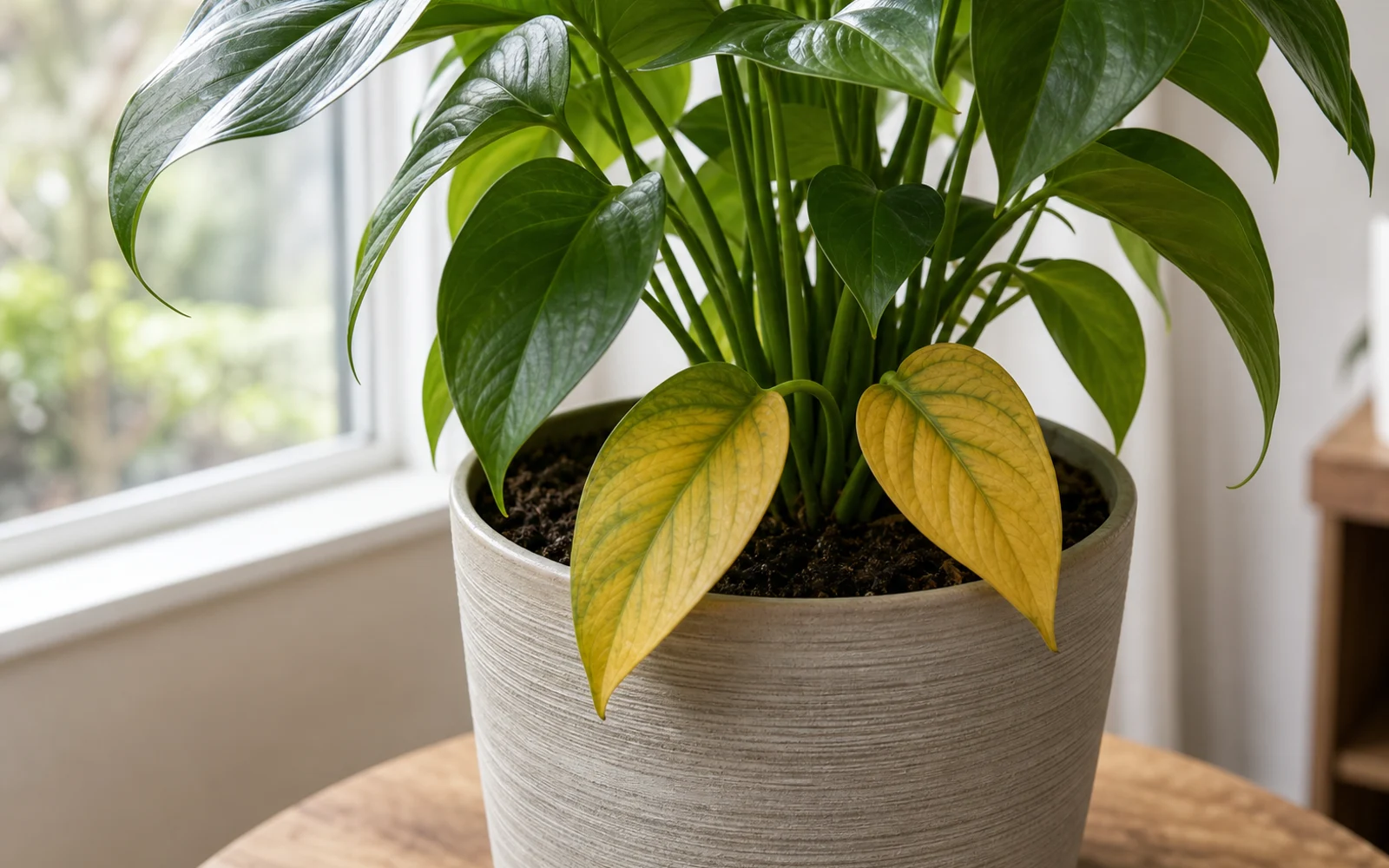
Yellowing lower leaves

Yellowing concentrated on lower leaves is a pattern to investigate, not an automatic watering cue. Compare its pace with moisture, light, root-zone conditions, and the rest of the plant.

This tool lists possible explanations, not a confirmed plant diagnosis.

Starting checks for yellowing lower leaves

  1. Note whether only a small number of older leaves are changing or whether yellowing is spreading through the plant, including new growth.
  2. Check moisture below the surface, drainage, and how long the pot remains heavy after watering.
  3. Inspect lower leaves and stems for pests, spots, or soft tissue, and note any recent change in light or location.
possible

Root zone staying too wet

Wet soil combined with yellowing, drooping, or soft growth may fit a moisture-related stress pattern.

Check: Feel deeper in the pot, confirm drainage, and note whether the pot remains heavy for a long time.

Warning signs to check promptly

  • Yellowing that spreads beyond lower leaves while soil stays wet, the plant droops, or roots appear dark and soft calls for a prompt root-zone inspection.
  • Lower-leaf yellowing with visible pests, webbing, sticky residue, or a rapid loss of leaves needs pest inspection rather than a watering-only response.

Frequently asked questions

Should I water when lower leaves start turning yellow?

Not automatically. Yellowing can overlap with excess water and other stresses. Check moisture below the surface and drainage first.

Does yellowing on lower leaves prove root rot?

No. It is one pattern among many. Root problems require a broader check of moisture, drainage, roots when accessible, and the plant's overall condition.

Should I remove yellow lower leaves?

Removing clearly yellow leaves may improve appearance, but it does not resolve the cause. Observe whether yellowing continues after you review care conditions.

Sources used for this guide