Plant problem

Pale leaves

Pale growth can reflect light or root stress.

Pale foliage can be linked with insufficient light or other stresses. Compare the colour change with light exposure, growth pattern, root-zone conditions, and any recent care changes.

Light positionCompare across the day
New versus old growthNote where paling starts
UrgencyUsually gradual
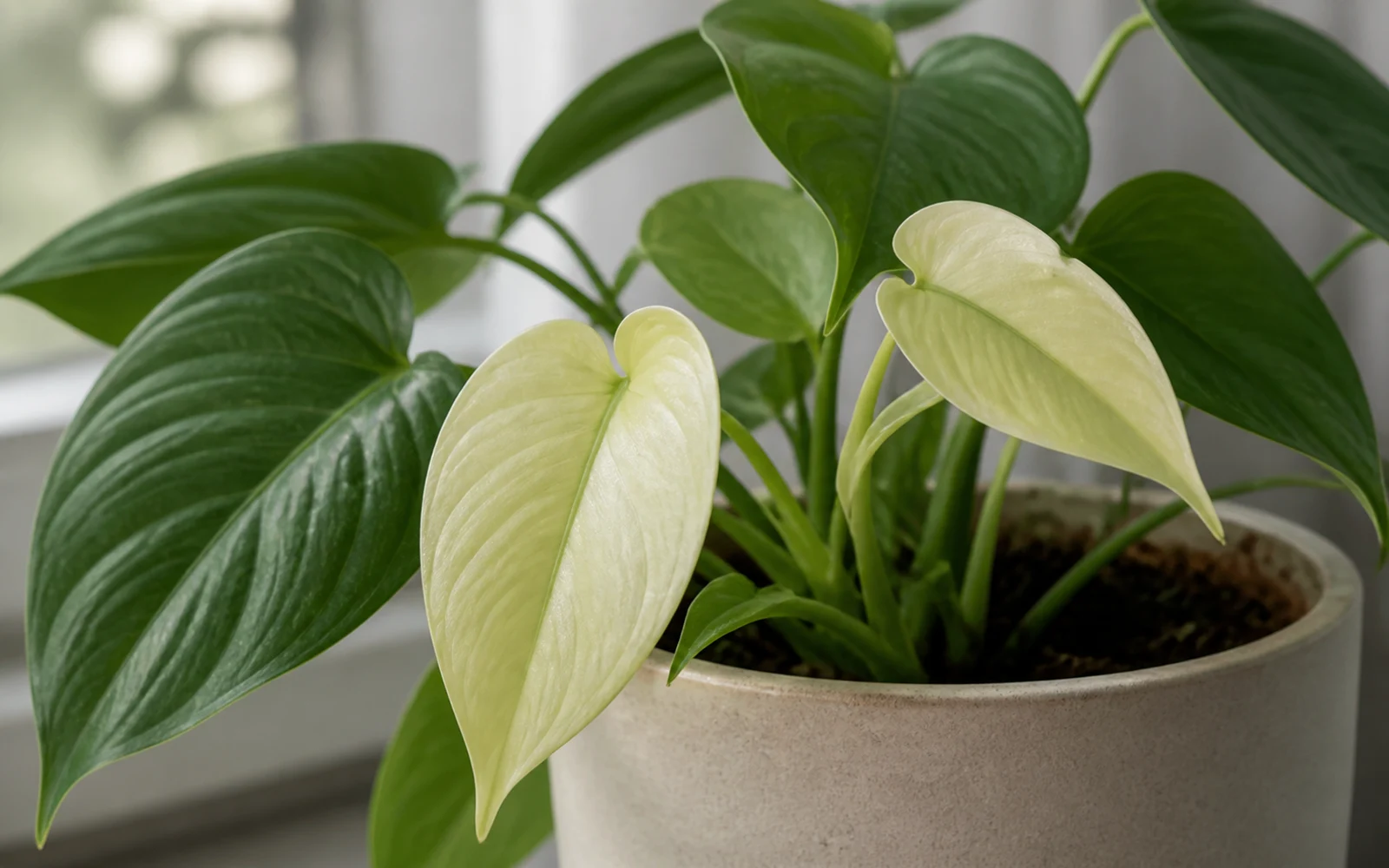
Very pale cream-green houseplant leaf with faint veins in a wide indoor plant photograph
Compare new and older leaves

At a glance

First possibilityLight conditions do not match the plant
Also compareRoot zone staying too wet
Roots and feedingInspect before fertilising
Acting paceUsually gradual

Quick pale leaves guide

Check first

  • Compare the current location and daily light with the light guidance for the specific plant, including any recent move or seasonal change.
  • Check whether the colour change is affecting new growth, older leaves, or the entire plant, and note any change in growth rate.
  • Check root-zone moisture and drainage before changing fertiliser or watering, since roots under stress can overlap with colour changes.

Common causes

  • Light conditions do not match the plant
  • Root zone staying too wet

Good to know

  • Naturally pale new leaves may darken as they mature.
  • Paling near a bright window differs from whole-plant fading.
  • Fertiliser should not be the first response to stressed roots.

What to do next

  1. Compare the plant's position with its documented light range.
  2. Note whether the palest leaves are newest or oldest.
  3. Check root-zone moisture and drainage before feeding.
  4. Change light exposure gradually and monitor new growth.

When to act fast

  • Paling combined with rapid yellowing, leaf drop, persistent wet soil, or loss of firmness needs a broader inspection rather than a fertiliser response alone.
  • Pale leaves with visible insects, stippling, webbing, or sticky residue should be checked for pests before changing light or feeding.

Not sure what your plant needs?Get a personalised shortlist from the observations you can confirm.

Compare observations →

Looking for plant-specific guidance?Compare these signs with the needs of your exact houseplant.

Browse plant guides →
Observation checker

Compare what you can confirm

Add only observations you are confident about. Unknown answers can stay blank, and the result remains a shortlist of checks rather than a diagnosis.

Results prioritise checks; they do not confirm one cause.
Common questions

Frequently asked questions

Do pale leaves mean a plant needs fertiliser?

Not necessarily. Light, root-zone conditions, and pests can overlap with colour changes. Check these factors before adding fertiliser.

Can insufficient light make foliage pale?

Yes, low light can be associated with pale foliage and stretched growth. Compare the plant's current exposure with its own light guidance before making a gradual adjustment.

Should I move a pale plant directly into full sun?

No. A sudden move into intense direct light can damage foliage. Make gradual changes that suit the specific plant's light tolerance.
Related plant profiles

Plants Care Editorial TeamPlant care research and editing

Last reviewed

This guide lists possible explanations and observable checks, not a confirmed diagnosis.