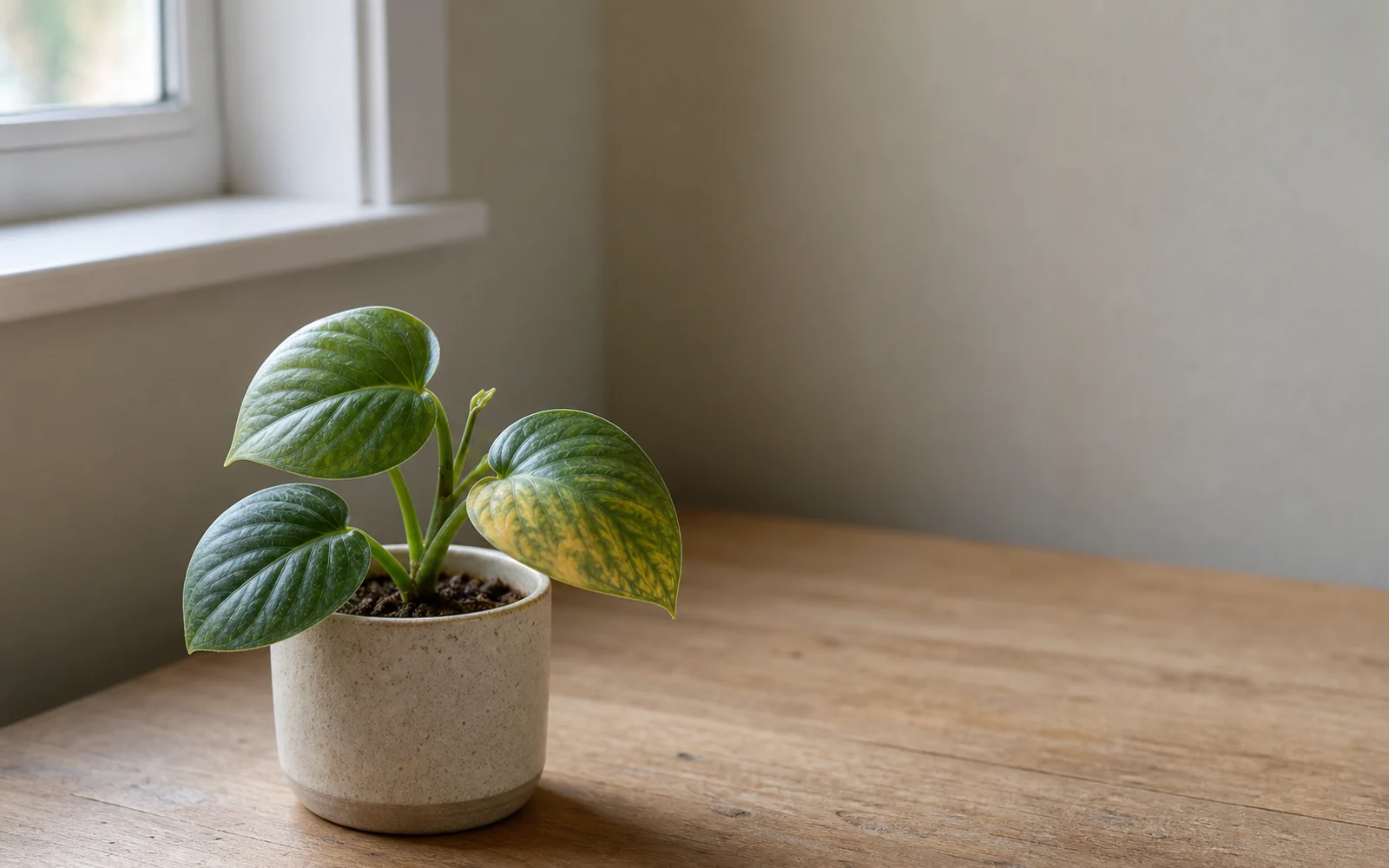
Light conditions do not match the plant
A plant away from its useful light range can show slower growth or foliage changes.
Check: Observe the position across the day and compare it with the plant’s light guidance.
Slow or stopped growth can reflect low light, root-zone conditions, pests, seasonal change, or other factors. Compare several observations before trying to force new growth.
This tool lists possible explanations, not a confirmed plant diagnosis.
A plant away from its useful light range can show slower growth or foliage changes.
Check: Observe the position across the day and compare it with the plant’s light guidance.
Wet soil combined with yellowing, drooping, or soft growth may fit a moisture-related stress pattern.
Check: Feel deeper in the pot, confirm drainage, and note whether the pot remains heavy for a long time.
Curling or damaged new growth can coincide with pests, among other causes.
Check: Inspect leaf undersides, stems, and new growth in good light.
Not necessarily. Light, root-zone conditions, pests, and seasonal changes can all affect growth. Check those observations before adding fertiliser.
Yes. Light is needed for plant growth, and plants in lower light use water more slowly. Compare the location with the plant's own light guidance.
Repot only when there is evidence that the pot or root zone is contributing, such as roots circling tightly or emerging from drainage holes. Avoid repotting as a default response.