Symptom guide

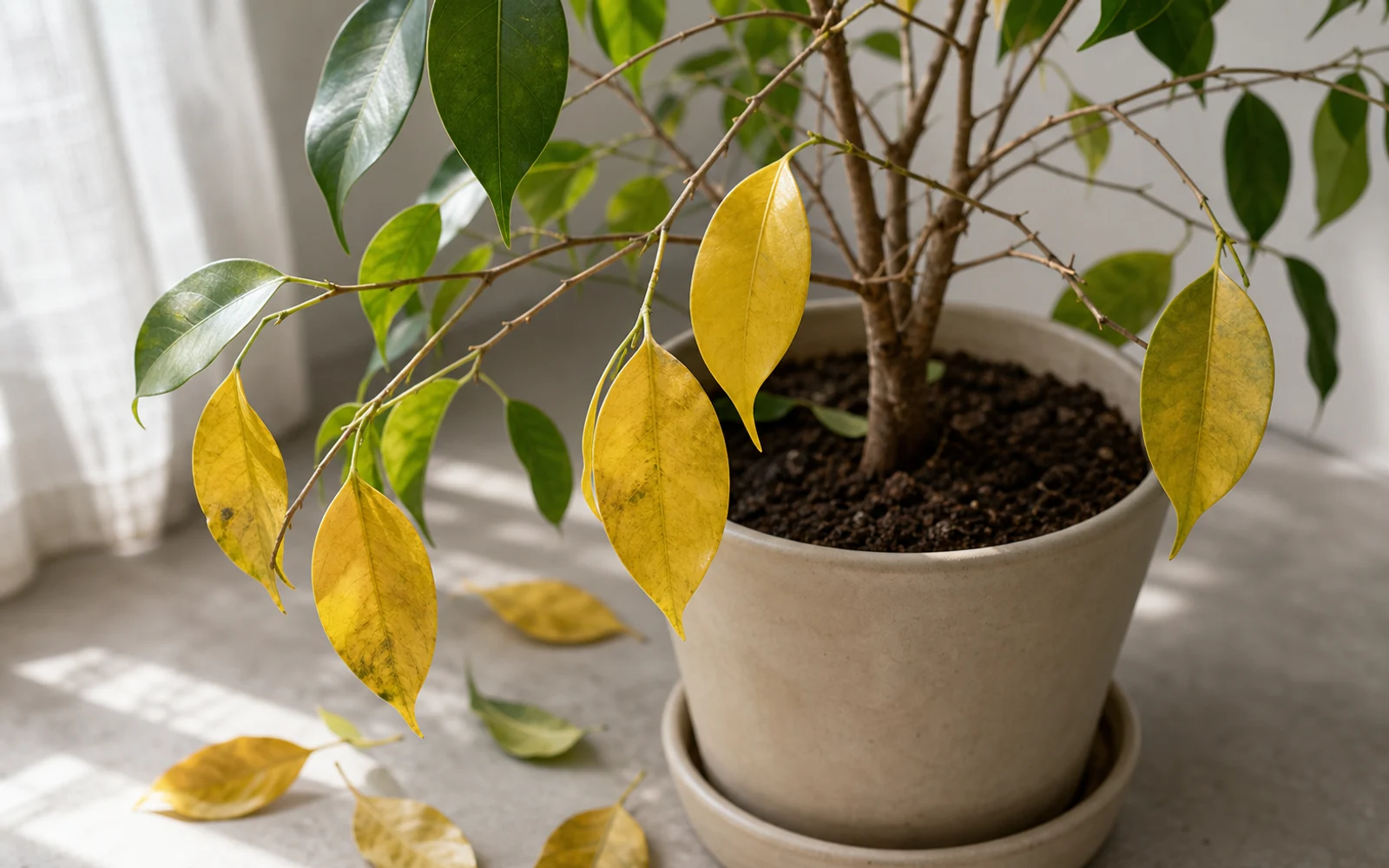
Leaf drop

Leaf drop is a response, not a diagnosis. Check how quickly it is happening and compare root-zone moisture, light, pests, and recent changes before trying to correct it.

This tool lists possible explanations, not a confirmed plant diagnosis.

Starting checks for leaf drop

  1. Record whether leaves are dropping gradually or suddenly and whether they are older, newer, yellowing, or otherwise damaged first.
  2. Check moisture below the surface, confirm drainage, and note any recent change in location, temperature, or light.
  3. Inspect stems and leaf undersides for insects, webbing, raised scale, or sticky residue before treating for pests.
possible

Root zone staying too wet

Wet soil combined with yellowing, drooping, or soft growth may fit a moisture-related stress pattern.

Check: Feel deeper in the pot, confirm drainage, and note whether the pot remains heavy for a long time.

possible

Root zone too dry

Dry soil with drooping or curling may fit underwatering or uneven re-wetting.

Check: Check deeper than the surface and lift the pot to judge its weight.

possible

Light conditions do not match the plant

A plant away from its useful light range can show slower growth or foliage changes.

Check: Observe the position across the day and compare it with the plant’s light guidance.

possible

Possible pest pressure

Curling or damaged new growth can coincide with pests, among other causes.

Check: Inspect leaf undersides, stems, and new growth in good light.

Warning signs to check promptly

  • Rapid leaf loss with wet soil, soft or dark roots, soft stems, or a sudden collapse needs a prompt root-zone inspection rather than more routine watering.
  • Leaf drop with sticky residue, raised bumps, webbing, or visible insects warrants separating the plant while you identify the pest issue.

Frequently asked questions

Does leaf drop always mean a plant is dying?

No. It is a sign that needs context. The speed, leaf pattern, soil moisture, light, and pest evidence are more useful than the symptom alone.

Can low light be related to leaf drop?

It can be one contributing environmental factor. Compare the plant's current light with its profile and consider recent seasonal or location changes.

Should I repot a plant that is losing leaves?

Repot only when your inspection indicates a root-zone or pot problem. Unnecessary repotting can add stress while the cause is still unclear.
Sources used for this guide