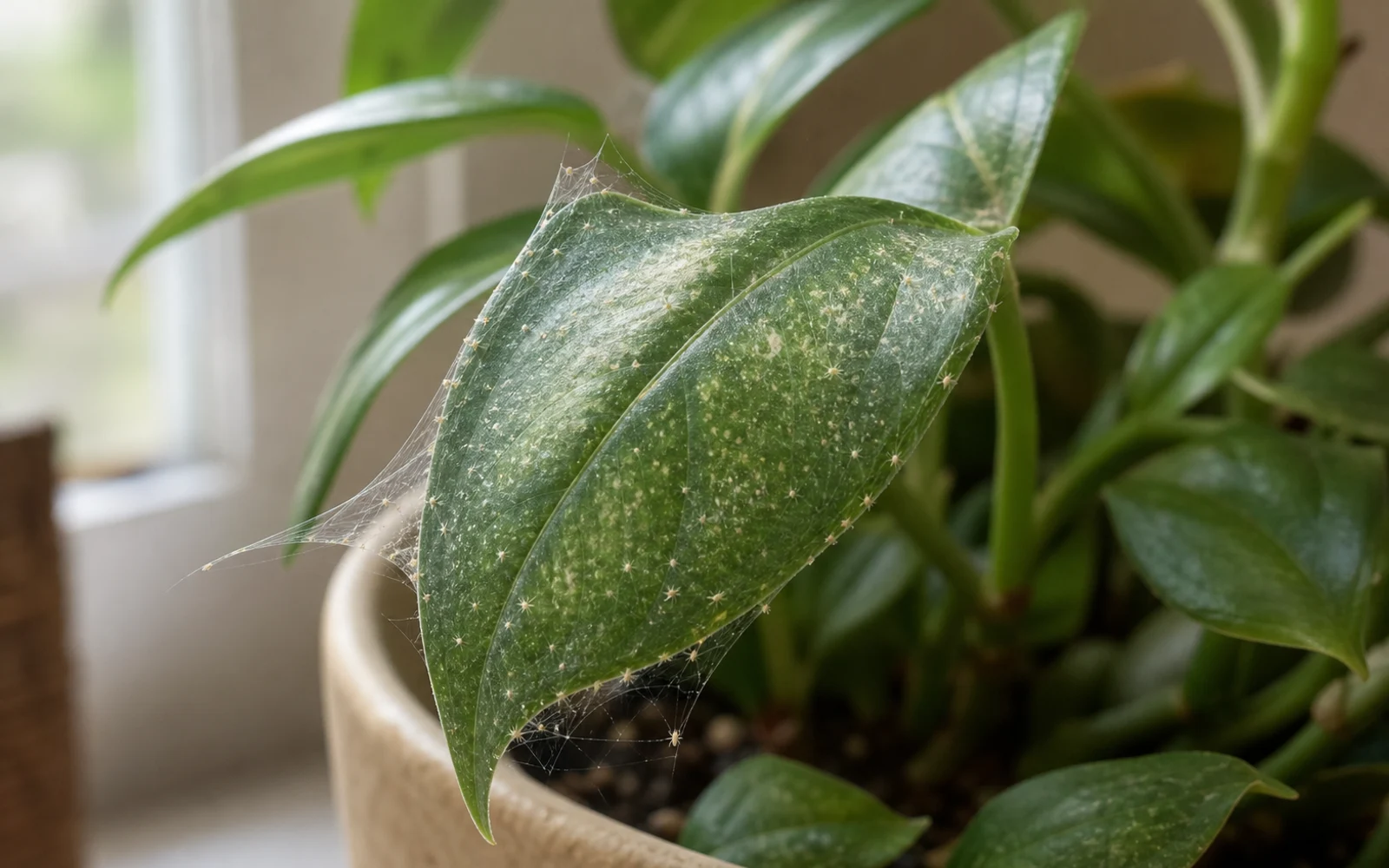
Visible insects, webbing, or sticky residue are reasons to inspect closely. Identify what you see before choosing a treatment, and keep the plant separate while you check it.
This tool lists possible explanations, not a confirmed plant diagnosis.
Starting checks for visible pests or webbing
Inspect leaf undersides, new growth, stem joints, pot rims, and saucers in good light; a magnifier can help with very small pests.
Look for direct clues such as fine webbing, stippling, cottony deposits, raised bumps, eggs, or shiny sticky residue.
Separate the plant from nearby plants while you identify the pest and check neighbouring plants for the same signs.
likely
Possible pest pressure
Curling or damaged new growth can coincide with pests, among other causes.
Check: Inspect leaf undersides, stems, and new growth in good light.
Warning signs to check promptly
Fine webbing with stippling or bronzing, or a rapidly increasing number of insects, calls for prompt identification and appropriate action rather than a general-purpose treatment guess.
A plant with pests plus severe leaf drop, distorted new growth, or major loss of vigour may need more than a surface rinse; follow product labels and seek local advice if the issue persists.
Frequently asked questions
Does webbing on a houseplant always mean spider mites?
Webbing is an important clue, but inspect it closely with other signs such as stippling or tiny moving pests before deciding what it is.
Why should I separate a plant with visible pests?
Isolation makes inspection easier and helps limit contact with nearby plants while you identify the pest and choose an appropriate response.
Can I use any insect spray indoors?
No. Use only a product labelled for the plant and indoor setting, identify the pest first where possible, and follow every label direction.