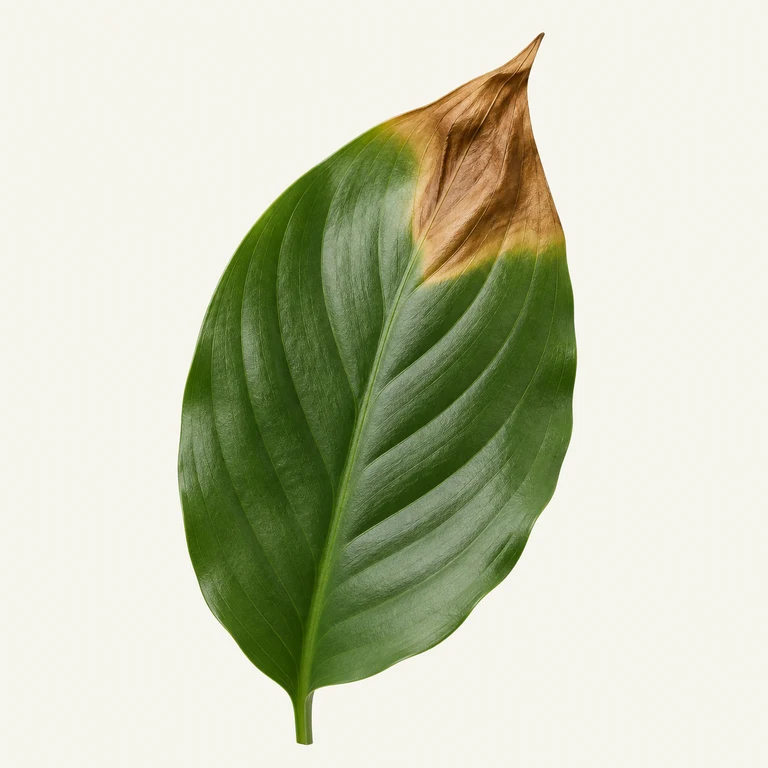
Watering
Brown tips
Brown tips show a pattern of damage. Check moisture, humidity, salts, and recent fertiliser use.
Check causesGoeppertia spp.
Also known as Prayer plant
A patterned-leaf houseplant profile for careful observation of indirect light, moisture, humidity, and gradual environmental changes.
Brown tips show a pattern of damage. Check moisture, humidity, salts, and recent fertiliser use.
Check causes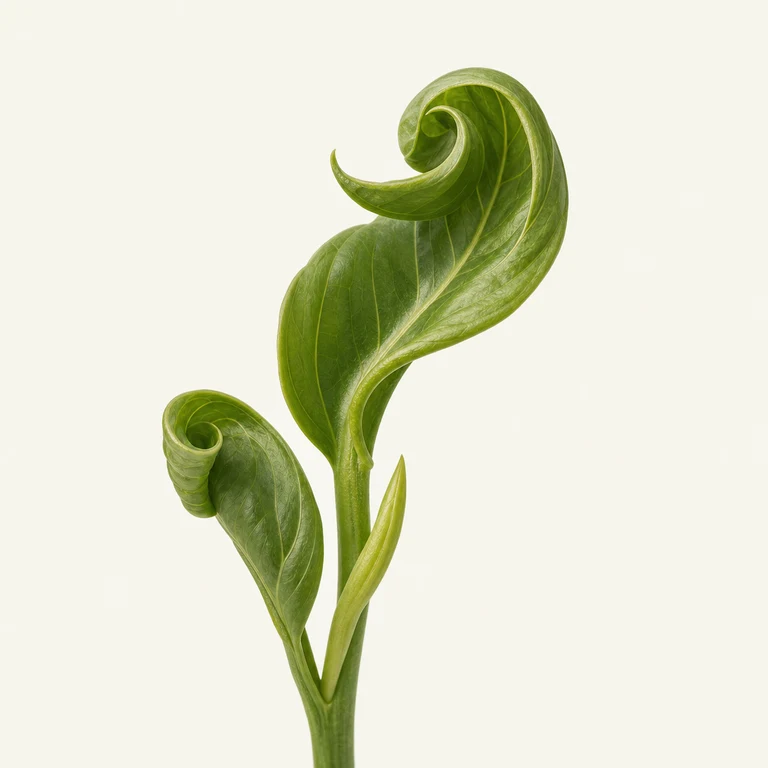
Curling can have multiple causes. Inspect new growth, leaf undersides, and moisture before treating.
Check causes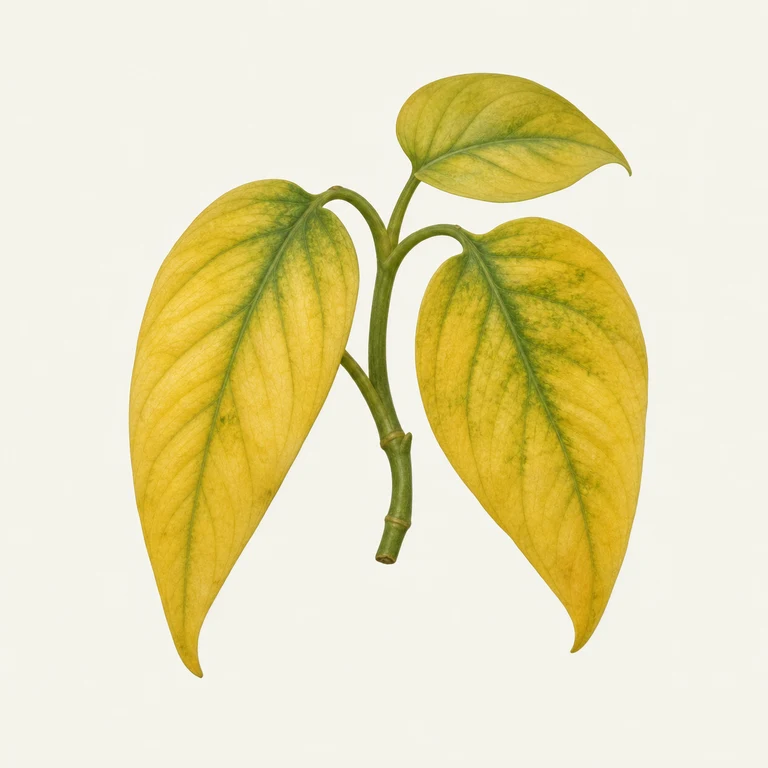
Yellow leaves signal stress, not a diagnosis. Check light, watering, pests, and recent changes.
Check causesProvide stable indirect light and make location changes gradually. Avoid responding to one leaf change with an abrupt sun exposure change.
Use both surface and deeper observations. If the plant changes posture, check whether the root zone is dry, moist, or wet before adding water.
This is a care estimate, not a fixed watering schedule. Check the root zone before deciding.
Choose a mix that can be checked easily and does not keep the root zone saturated. Confirm drainage before assuming a droop is thirst.
Humidity may matter for this profile, but it should be assessed alongside airflow, temperature, light, and soil rather than in isolation.
Pause feeding while unexplained foliage changes are being investigated. Use a labelled product only when conditions are otherwise stable.
Consider the mix, roots, and drainage before repotting. A larger pot is not automatically a solution for repeated foliage changes.
Use clean tools for clearly damaged foliage and keep healthy leaves in place while you observe the next growth.
Divide only a healthy, established clump with clean tools; do not use propagation to address an active care problem.
Aim for a stable indoor range around 18–28°C. Local conditions and seasonal changes still matter.
For cats: safe; for dogs: safe; for humans: unknown. Keep plant material out of reach of children and animals; consult a veterinary or medical professional if ingestion is suspected.
Review moisture, light, airflow, and recent changes together.
Pause watering and inspect drainage before changing other care.
No. Curling can overlap with several conditions, so check moisture, light, temperature, and visible pests before changing care.
ASPCA lists Calathea spp. as non-toxic to cats and dogs.
Check the moisture of the mix, light, air movement, and recent changes together before changing one care input.
Divide only a healthy, established clump with clean tools.
These references support the safety, temperature, watering, pest, propagation, and warning-sign guidance in this profile.
.JPG)