Symptom guide

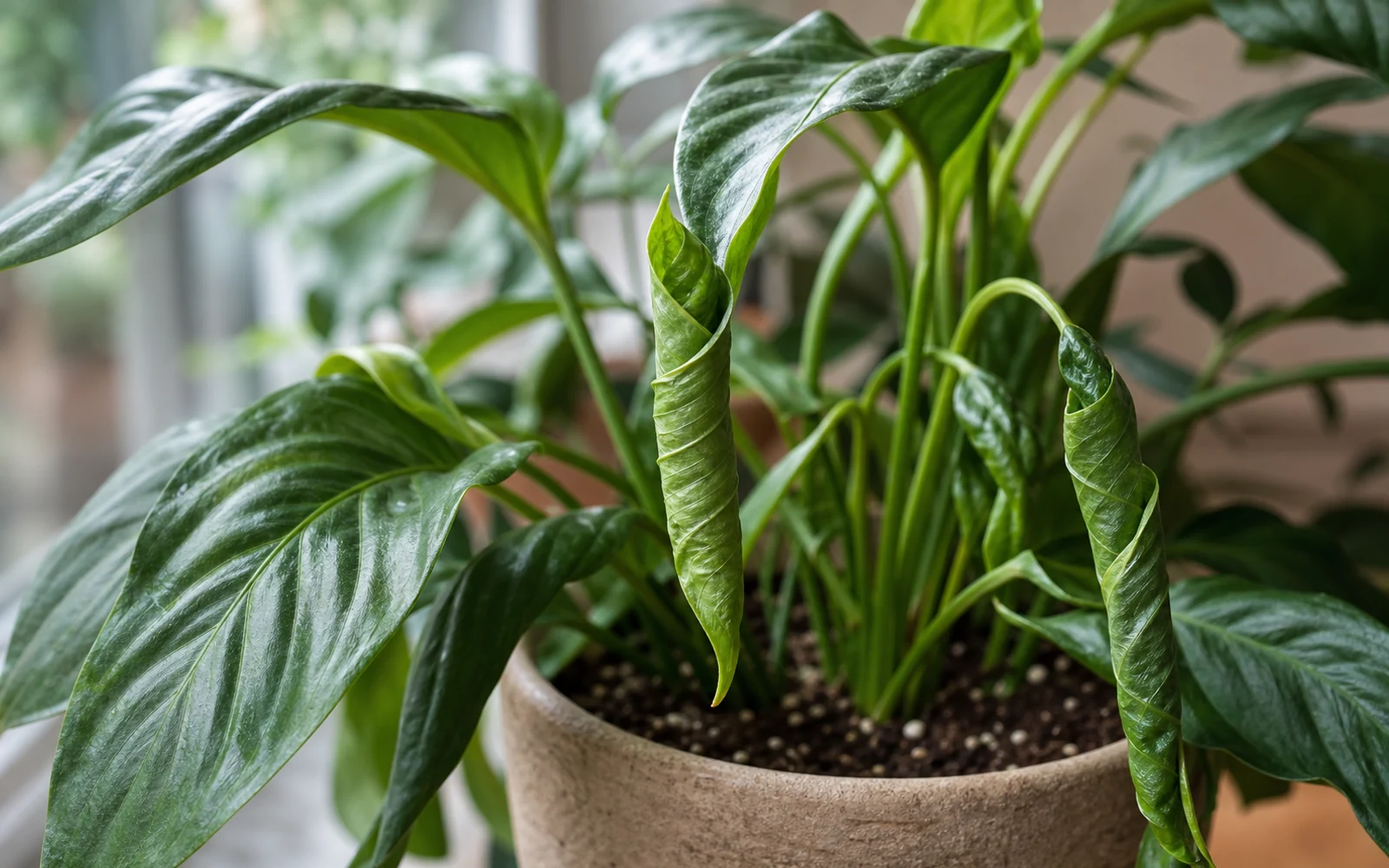
Curling leaves

Curling leaves have more than one possible cause. Begin with an inspection of new growth, leaf undersides, and root-zone moisture before changing conditions or applying a treatment.

This tool lists possible explanations, not a confirmed plant diagnosis.

Starting checks for curling leaves

  1. Inspect young leaves, leaf undersides, and stem joints in good light for insects, webbing, sticky residue, or stippling.
  2. Check moisture below the surface and review whether watering has been uneven or the pot has been standing in water.
  3. Note recent changes in light, temperature, location, or plant care before moving the plant or treating it.
likely

Possible pest pressure

Curling or damaged new growth can coincide with pests, among other causes.

Check: Inspect leaf undersides, stems, and new growth in good light.

Warning signs to check promptly

  • Curling that is concentrated on new growth with visible insects, webbing, sticky residue, or stippling should be treated as a possible pest issue and kept separate from nearby plants while checked.
  • Curling with rapid yellowing, dark tissue, or loss of firmness needs a broader root-zone and environmental inspection rather than an automatic pest treatment.

Frequently asked questions

Do curled leaves always indicate pests?

No. Pests are one possibility. Look for direct evidence such as insects, webbing, sticky residue, or stippling before selecting a pest treatment.

Should I mist curled leaves?

Do not use misting as a diagnosis or universal fix. First identify whether the root zone, light, recent changes, or pest signs better explain the pattern.

What should I inspect first for curled new leaves?

Inspect leaf undersides, stem joints, and developing leaves in good light, then compare what you see with moisture and recent-environment observations.
Sources used for this guide