Symptom guide

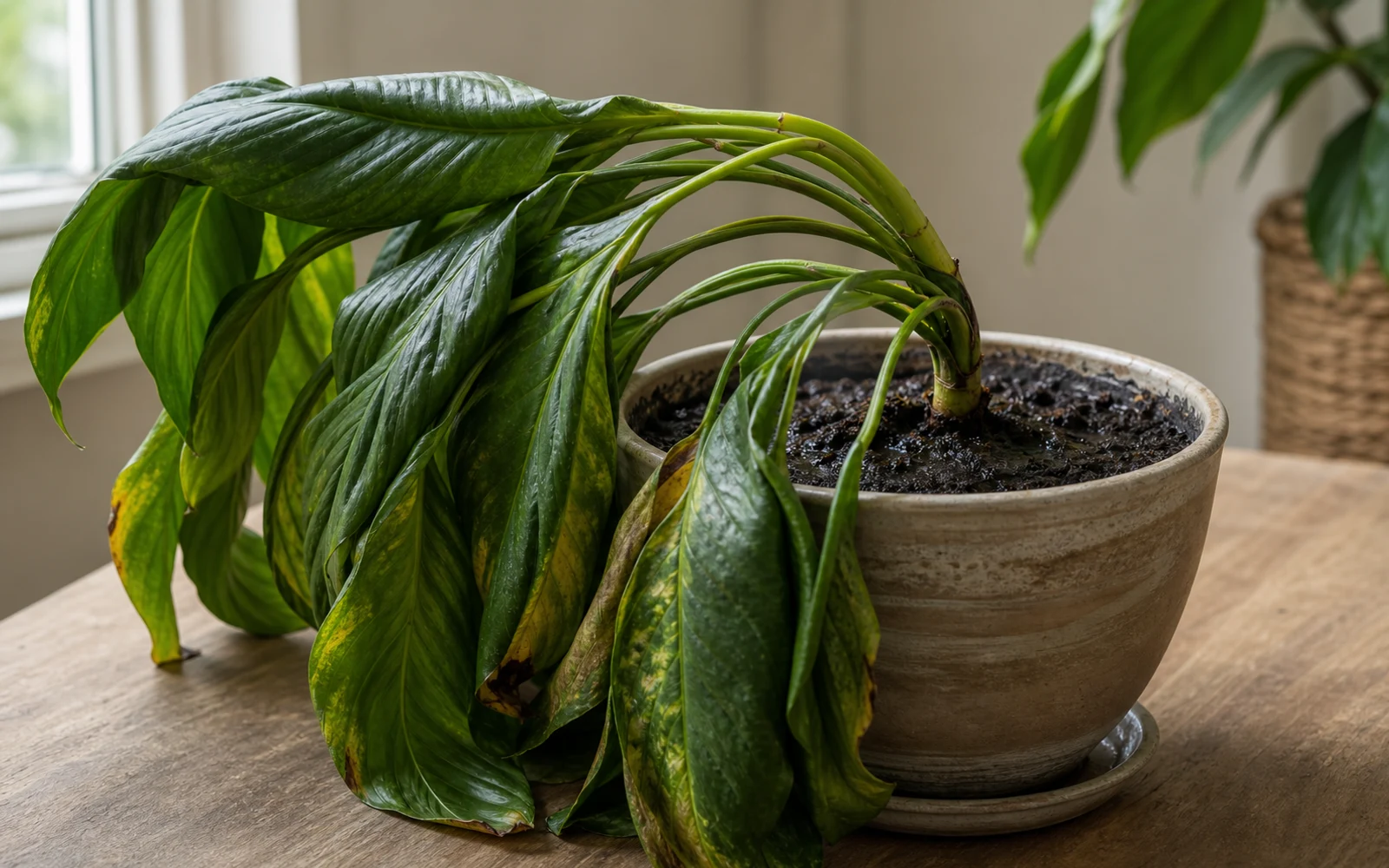
Sudden collapse

A sudden loss of firmness or posture is a warning observation. Pause routine changes and inspect the root zone, stem tissue, drainage, and recent conditions promptly.

This tool lists possible explanations, not a confirmed plant diagnosis.

Starting checks for sudden collapse

  1. Check whether the potting mix is wet, whether the container drains freely, and whether the plant has been sitting in collected water.
  2. Inspect accessible roots and stem bases for dark, soft, or discoloured tissue, without assigning a cause from one sign alone.
  3. Note recent cold, heat, light, watering, repotting, or pest changes and separate the plant from nearby plants while you inspect it if tissue is deteriorating.
possible

Possible root rot or root-zone decay

Wet-root-zone warning signs can justify a root inspection, but they do not confirm a diagnosis by themselves.

Check: Check deeper soil, drainage, and roots if accessible. Note soft or dark roots, an unusual smell, or rapidly collapsing growth without assuming one cause.

Warning signs to check promptly

  • Dark or soft roots, a soft or blackening stem base, an unusual smell, or spreading tissue collapse needs prompt attention; do not continue routine watering.
  • Rapid collapse with visible pests, wet-looking lesions, or decline in nearby plants warrants separation and local horticultural advice if the cause cannot be identified safely.

Frequently asked questions

Should I water a plant that has suddenly collapsed?

Do not water automatically. Collapse can occur with a wet root zone as well as drought and other problems. Check moisture and drainage first.

Does sudden collapse confirm root rot?

No. Root rot is one possible explanation when there are supporting signs such as dark, soft roots and persistently wet mix. A full inspection is still needed.

When should I seek local help for a collapsing plant?

Seek local horticultural help when collapse is rapid or spreading, stems or roots are soft or dark, or you cannot safely identify the issue after basic checks.
Sources used for this guide