Symptom guide

Soft or mushy stems

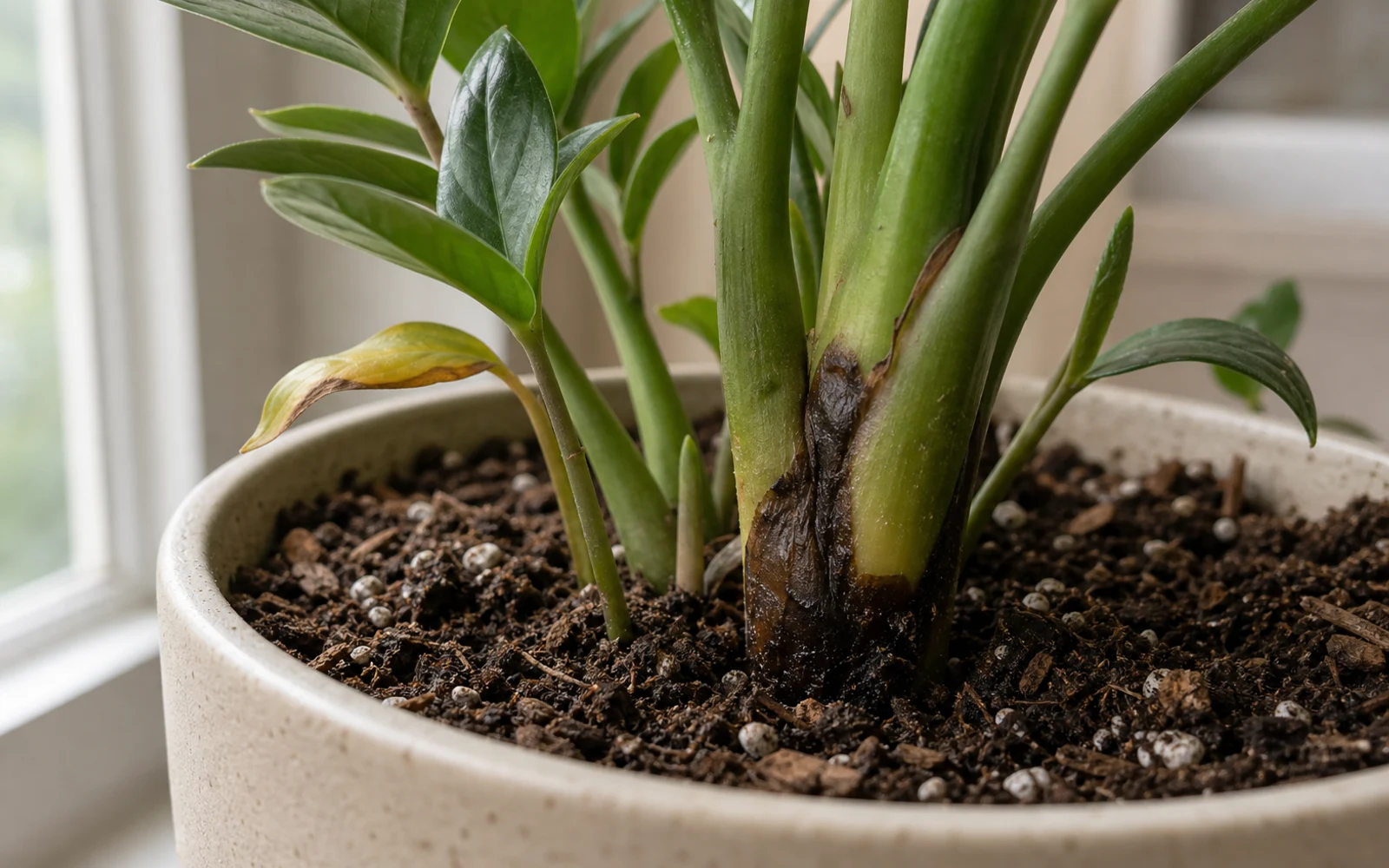
Soft or mushy stem tissue is a warning observation. Pause routine watering and inspect the root zone, drainage, and the extent of the soft tissue before taking further action.

This tool lists possible explanations, not a confirmed plant diagnosis.

Starting checks for soft or mushy stems

  1. Check whether the mix is persistently wet and whether excess water can leave the container freely.
  2. Examine the affected stem and any accessible roots for dark, soft, or discoloured tissue without assuming a cause from one sign.
  3. Separate the plant from nearby plants while you inspect it if there is spreading discoloration, softness, or a possible pest issue.
likely

Root zone staying too wet

Wet soil combined with yellowing, drooping, or soft growth may fit a moisture-related stress pattern.

Check: Feel deeper in the pot, confirm drainage, and note whether the pot remains heavy for a long time.

Warning signs to check promptly

  • Soft tissue that spreads, a darkened stem base, a sour smell, or a rapid loss of firmness warrants prompt inspection rather than continued routine care.
  • If accessible roots are dark and soft while the mix stays wet, do not add water; reassess drainage and seek local horticultural help if the decline continues.

Frequently asked questions

Should I water a plant with a soft stem?

Not automatically. Soft stems alongside wet mix can signal a root-zone problem. Check moisture and drainage first.

Does a soft stem confirm root rot?

No. It is a warning observation, not a diagnosis. Look at the root zone, drainage, tissue pattern, and the plant's recent conditions together.

Why separate a plant with soft tissue?

Separating it during inspection makes it easier to observe and reduces unnecessary contact with nearby plants while you rule out pests or other spreading concerns.
Sources used for this guide