Symptom guide

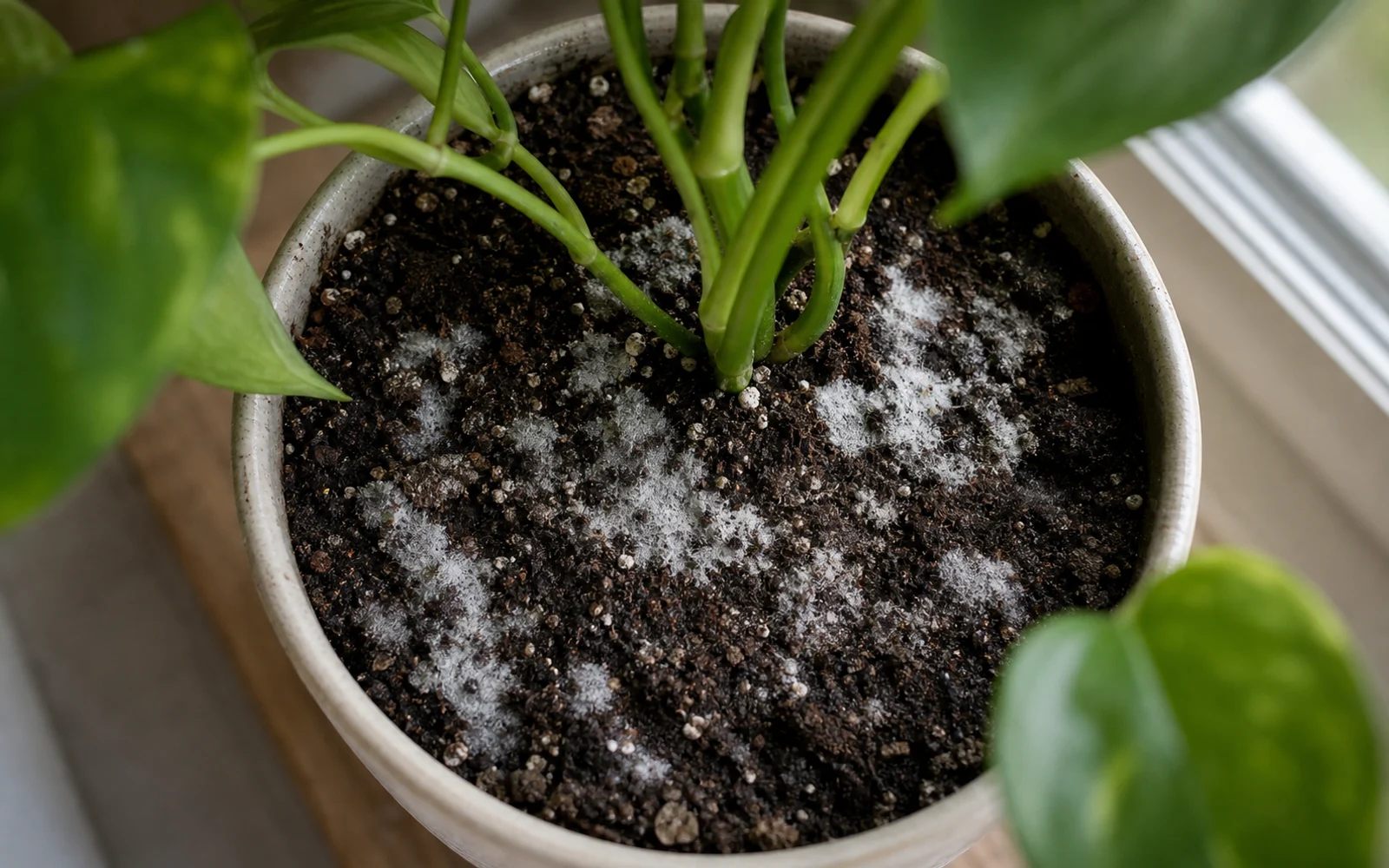
Mold on soil

White, gray, or green growth on potting media is usually a surface-moisture observation. Check watering, airflow, drainage, and whether a crust is affecting how water enters the mix.

This tool lists possible explanations, not a confirmed plant diagnosis.

Starting checks for mold on soil

  1. Check whether the surface and deeper mix are staying wet longer than expected for the plant, and confirm that the pot drains freely.
  2. Look at the surface growth: note its colour, thickness, and whether it has formed a dry crust that changes how water soaks into the mix.
  3. Remove dead leaves and debris from the soil surface, then inspect for small flying insects or other pest signs around the pot.
likely

Root zone staying too wet

Wet soil combined with yellowing, drooping, or soft growth may fit a moisture-related stress pattern.

Check: Feel deeper in the pot, confirm drainage, and note whether the pot remains heavy for a long time.

Warning signs to check promptly

  • A thick surface mat that becomes dry and crusty can interfere with water entering the potting media and should be addressed rather than ignored.
  • Surface growth combined with constantly wet mix, fungus gnats, wilting, or declining foliage needs a root-zone review; the visible growth alone does not diagnose root rot.

Frequently asked questions

Is mold on potting soil always harmful to the plant?

Not usually. Surface algae or fungal growth often reflects moist conditions, but excessive growth can form a mat that interferes with water entering the potting media.

Should I water less if mold appears on soil?

Review the plant's moisture needs rather than using a fixed reduction. Let the surface dry appropriately, confirm drainage, and avoid keeping the mix wetter than the profile recommends.

Are fungus gnats related to surface growth on soil?

Fungal or algal mats can attract fungus gnats, and wet potting media also favours them. Inspect the pot and use the plant's moisture guidance.

Sources used for this guide