Symptom guide

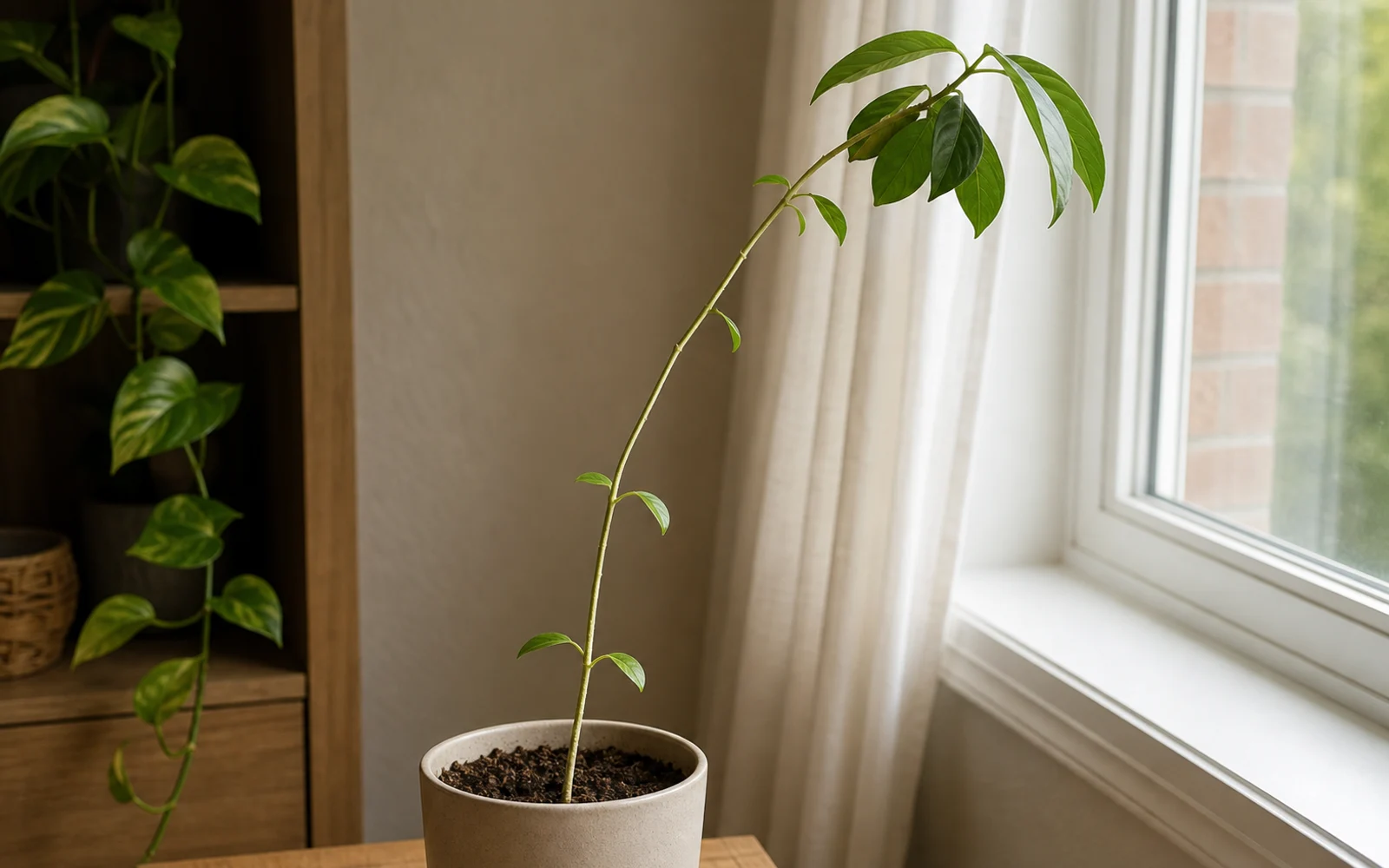
Leggy growth

Long, thin stems and wide gaps between leaves are often a light-related growth pattern. Compare new growth with the plant's light needs before pruning or moving it.

This tool lists possible explanations, not a confirmed plant diagnosis.

Starting checks for leggy growth

  1. Look for long spaces between leaf nodes, stems leaning toward a light source, and sparse growth compared with older growth.
  2. Observe the plant's usable light across the day and compare it with the light guidance in its profile.
  3. Check that the potting mix is not staying wet longer than expected in a dimmer location before increasing watering or feeding.
likely

Light conditions do not match the plant

A plant away from its useful light range can show slower growth or foliage changes.

Check: Observe the position across the day and compare it with the plant’s light guidance.

Warning signs to check promptly

  • Leggy growth together with pale leaves or substantial leaf drop suggests the plant's conditions need review; do not rely on fertiliser alone to correct it.
  • A sudden move from low light to intense direct sun can damage leaves. Adjust exposure gradually and according to the individual plant's tolerance.

Frequently asked questions

What does leggy growth look like?

It commonly describes long, thin stems with unusually wide spaces between leaf nodes, often leaning toward the available light.

Will more fertiliser fix a leggy plant?

No. If insufficient light is involved, extra fertiliser does not replace suitable light. Review exposure and follow the plant's feeding guidance.

Can I prune leggy stems?

Pruning can be appropriate for some plants, but first correct the likely environmental mismatch so new growth has better conditions.

Sources used for this guide