Symptom guide

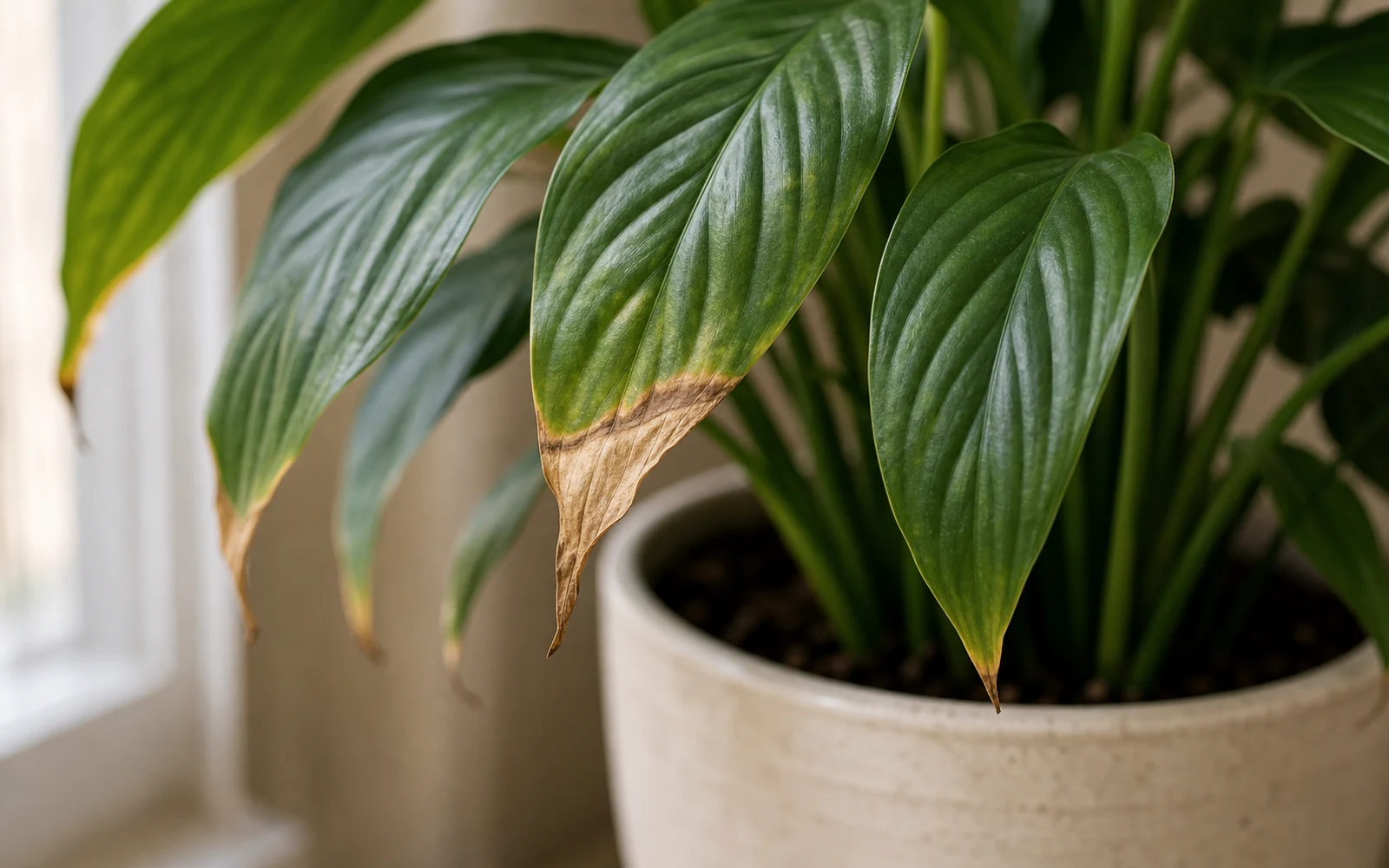
Brown tips

Brown tips describe a pattern of damage, not one confirmed cause. Start with an even root-zone moisture check, then review recent fertiliser use and the plant's environment.

This tool lists possible explanations, not a confirmed plant diagnosis.

Starting checks for brown tips

  1. Check whether the mix is dry below the surface rather than judging from a dry-looking top layer alone.
  2. Look for a pattern: only tips, whole margins, older leaves, or new leaves can point to different next checks.
  3. Record recent feeding, water changes, heat exposure, and whether the pot drains freely.
possible

Root zone too dry

Dry soil with drooping or curling may fit underwatering or uneven re-wetting.

Check: Check deeper than the surface and lift the pot to judge its weight.

Warning signs to check promptly

  • Browning that advances quickly beyond the tips while the plant is wilting or the mix remains wet needs a closer root-zone and pest inspection.
  • Dark, soft roots or a sour smell when the root ball is checked are warning observations; do not keep watering without reassessing drainage.

Frequently asked questions

Do brown tips prove that indoor air is too dry?

No. Tip damage can have several explanations. Check root-zone moisture, drainage, and recent care changes before attributing it to humidity.

Should I give extra water for brown tips?

Only if the mix is dry at the appropriate depth for that plant. Repeated small amounts of water can leave parts of a pot dry while other areas stay wet.

Can fertiliser be relevant to brown leaf tips?

It can be one possible factor. Note recent fertiliser use and follow the product label; do not add more fertiliser as a response to damaged tips.
Sources used for this guide