Watering
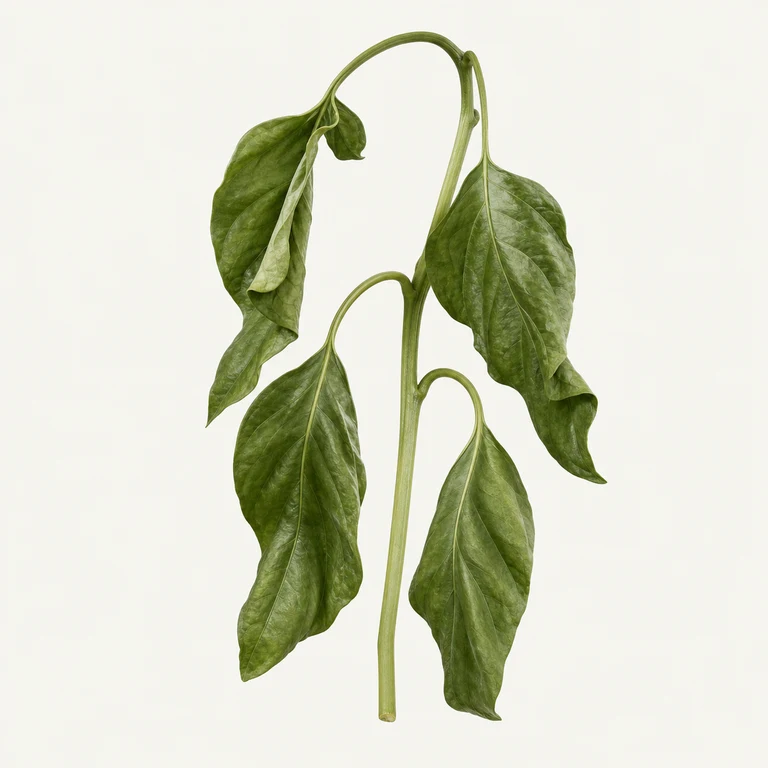
Drooping
Drooping can mean too little or too much water. Check roots, soil moisture, and the pot.
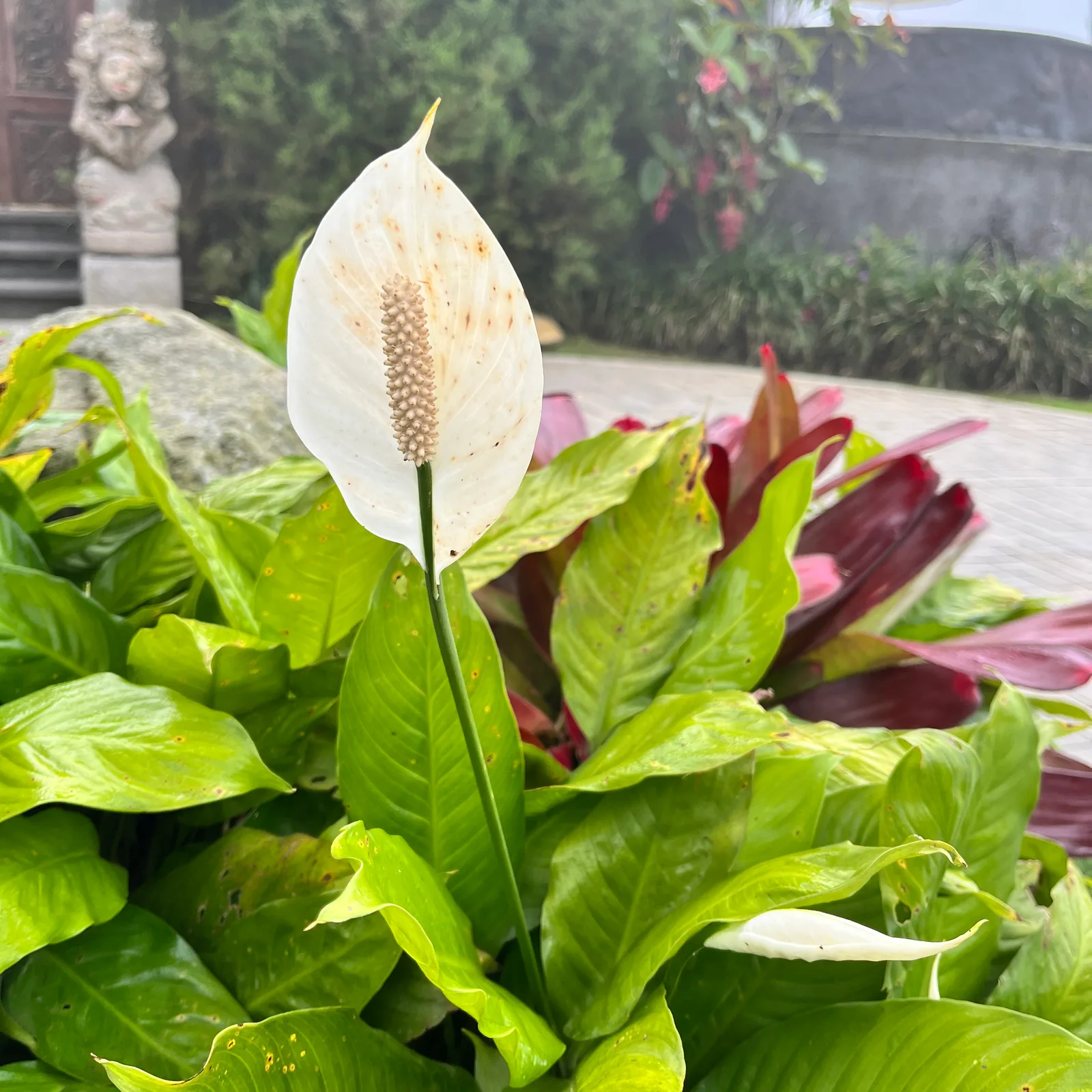
Check causesSpathiphyllum
A leafy flowering houseplant that prefers evenly attentive care and indirect light.
Drooping can mean too little or too much water. Check roots, soil moisture, and the pot.
Check causes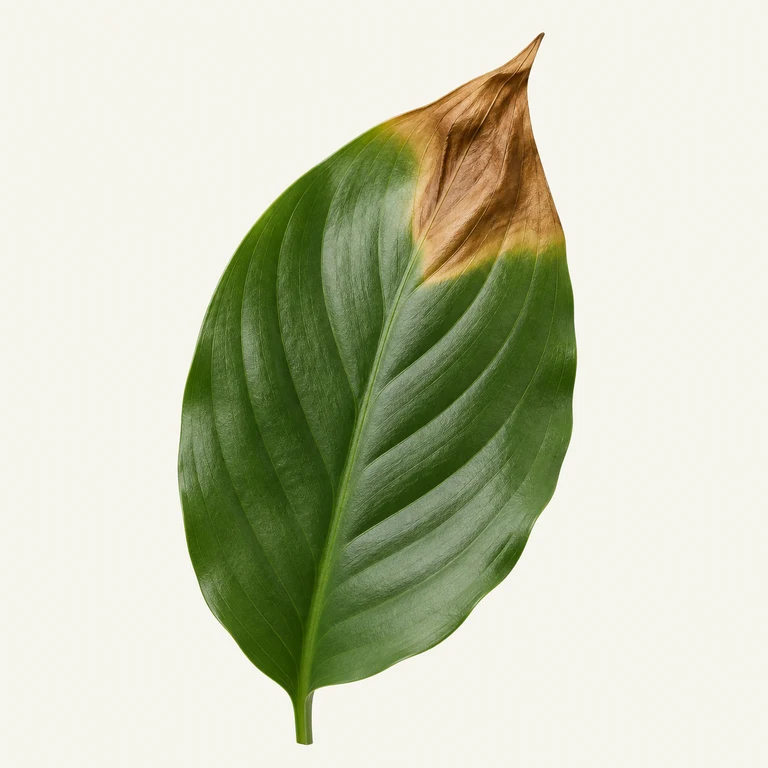
Brown tips show a pattern of damage. Check moisture, humidity, salts, and recent fertiliser use.
Check causes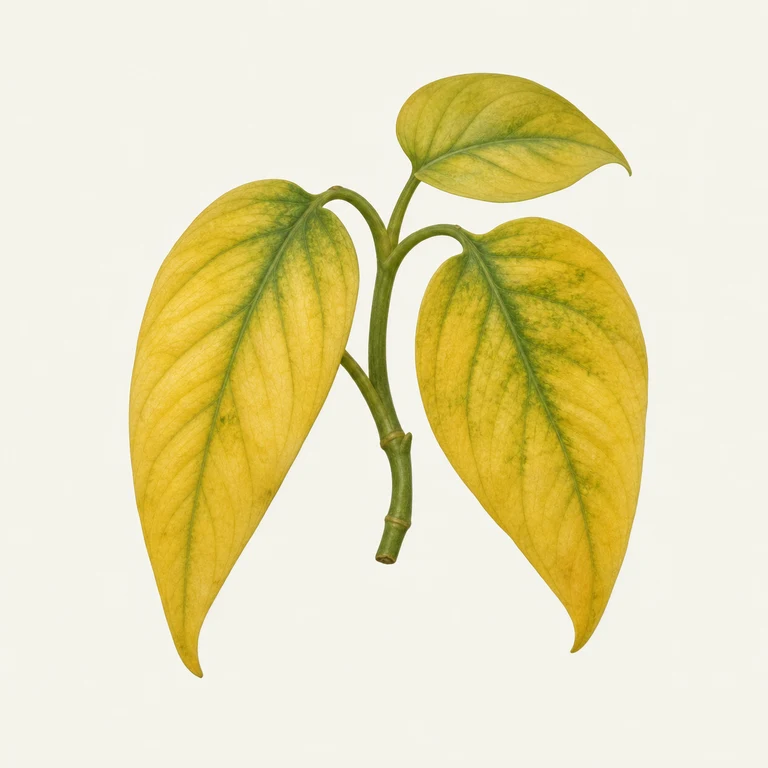
Yellow leaves signal stress, not a diagnosis. Check light, watering, pests, and recent changes.
Check causes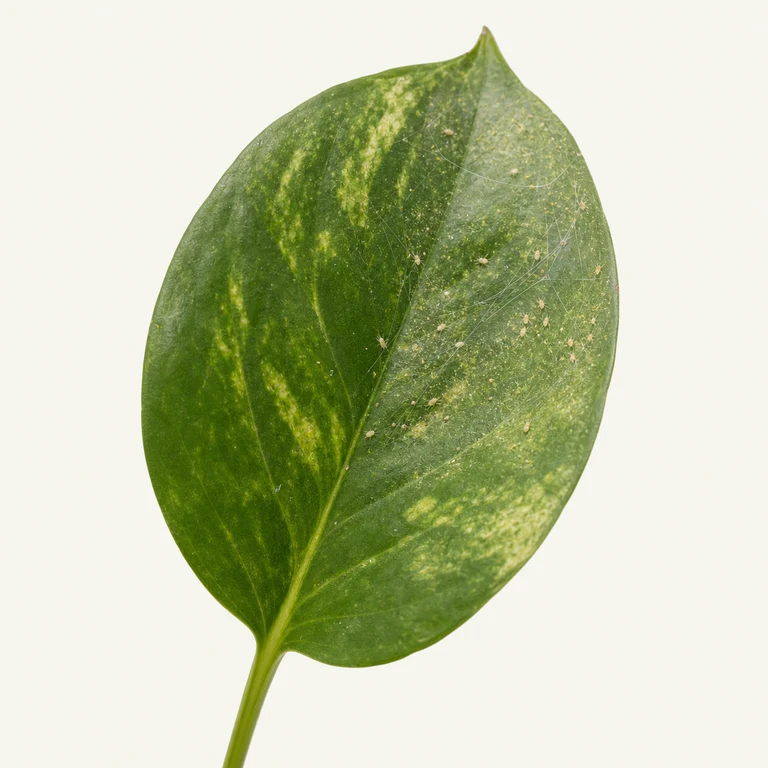
Insects, webbing, or sticky residue need fast attention. Inspect closely and confirm what you see.
Check causesGive medium to bright indirect light; too much direct sun may mark foliage.
Check the top 2–4 cm and the pot’s weight. Water when that zone is drying, but do not leave the container standing in water.
This is a care estimate, not a fixed watering schedule. Check the root zone before deciding.
Use a mix that holds enough moisture to observe while still draining. Re-check below the surface if leaves droop before assuming the plant is thirsty.
It often appreciates more humidity than a very dry room provides, but airflow and drainage still matter.
Use a labelled fertilizer cautiously during active growth. If growth or foliage changes, check light and soil before changing feeding.
Repot when roots, drainage, or repeated uneven drying point to the container or mix, not solely because the plant has drooped once.
Remove yellow or damaged leaves with clean tools after checking the root zone. Preserve healthy foliage while you observe the response.
Propagation guidance should be reviewed for this plant before use; do not treat it as a substitute for correcting a care issue.
Aim for a stable indoor range around 18–28°C. Local conditions and seasonal changes still matter.
For cats: toxic; for dogs: toxic; for humans: irritating. Keep plant material out of reach of children and animals; consult a veterinary or medical professional if ingestion is suspected.
Do not assume the plant needs more water. Pause watering and check drainage and the deeper mix before making another change.
Inspect both sides of leaves and stems in good light. Confirm what is visible before isolating the plant or choosing a treatment.
Not always. Check the soil first, since both very dry and very wet roots can coincide with drooping.
Use medium to bright indirect light as the starting point. Avoid abrupt direct sun and make changes gradually while observing the foliage.
Brown tips can overlap with watering, airflow, and room conditions. Check the soil and recent environmental changes before changing care.
This profile is marked toxic for cats and dogs. Keep it out of reach and contact a veterinary professional if ingestion is suspected.
These references support the safety, temperature, watering, pest, propagation, and warning-sign guidance in this profile.