Symptom guide

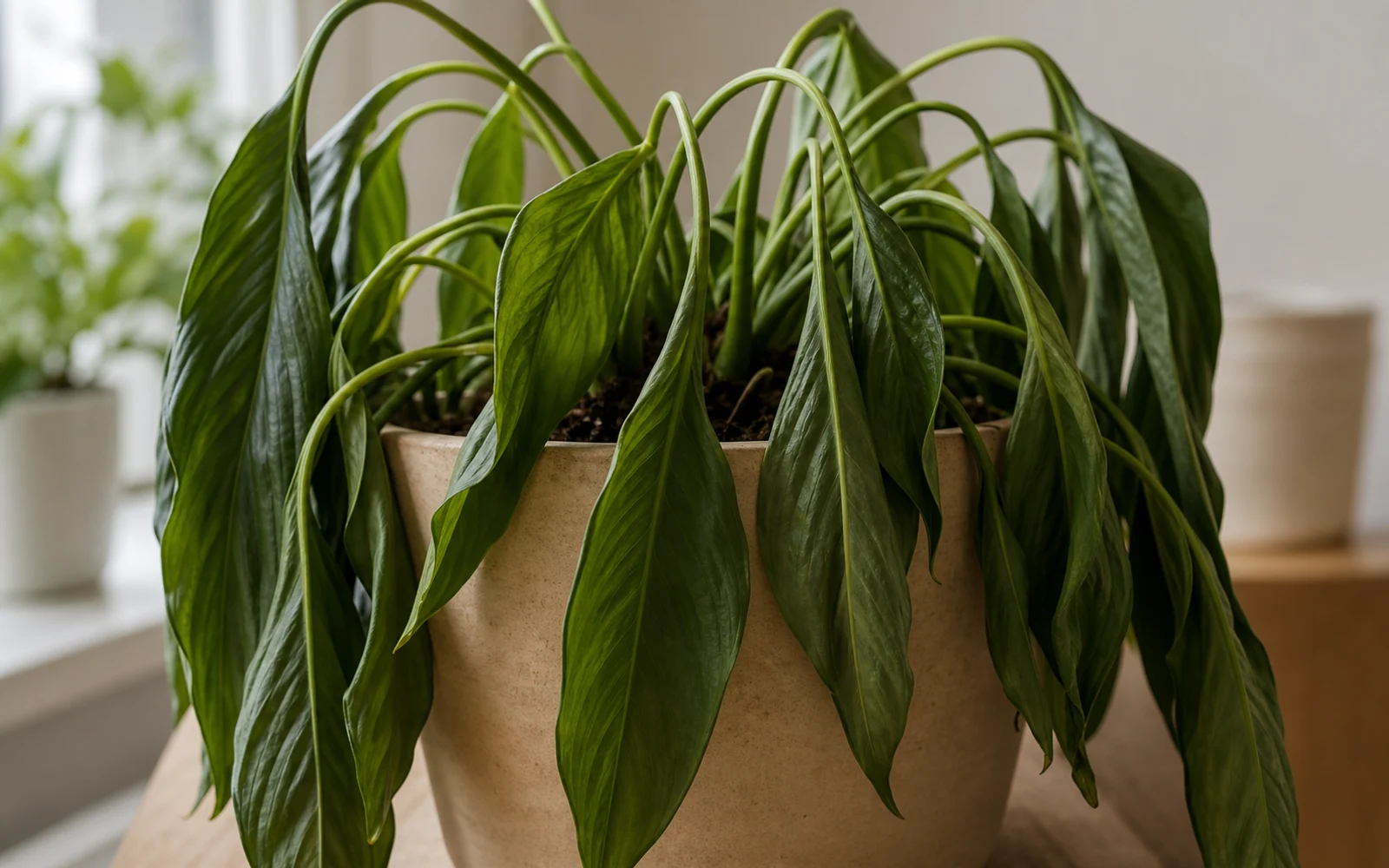
Drooping

Drooping can occur when a root zone is too dry or stays too wet, among other stresses. Check the pot and plant together before deciding that it needs water.

This tool lists possible explanations, not a confirmed plant diagnosis.

Starting checks for drooping

  1. Check moisture deeper in the mix and lift the pot to compare its weight with a freshly watered pot if you know it.
  2. Confirm that the container has an open drainage hole and that it is not standing in collected water.
  3. Inspect stems, leaf undersides, and accessible roots for discoloration, softness, insects, or webbing.
likely

Root zone too dry

Dry soil with drooping or curling may fit underwatering or uneven re-wetting.

Check: Check deeper than the surface and lift the pot to judge its weight.

Warning signs to check promptly

  • Drooping with a persistently wet mix, dark or soft roots, or a soft stem needs prompt attention to the root zone rather than more water.
  • A sudden collapse or spreading dark tissue is not a routine watering cue; pause changes and inspect the plant carefully.

Frequently asked questions

Does drooping always mean underwatering?

No. Overwatering and root problems can also be associated with wilting. Soil moisture and drainage are the first checks, not the final diagnosis.

Can I test drooping by watering again?

Avoid using more water as a test when the mix is already moist or wet. First check deeper in the pot and make sure water can drain.

When should I inspect roots?

Inspect accessible roots when drooping persists with wet soil or is accompanied by discoloration, softness, or an unusual smell. Those signs do not confirm one cause by themselves.
Sources used for this guide