Plant problem

Crispy leaves

Dry, brittle tissue points to accumulated stress.

Crispy, dry-feeling foliage can follow dry root-zone conditions or light stress, among other causes. Check the damage pattern and the potting mix before changing care.

Moisture and heatCheck recent extremes
Salts and airflowReview the environment
UrgencyUsually moderate
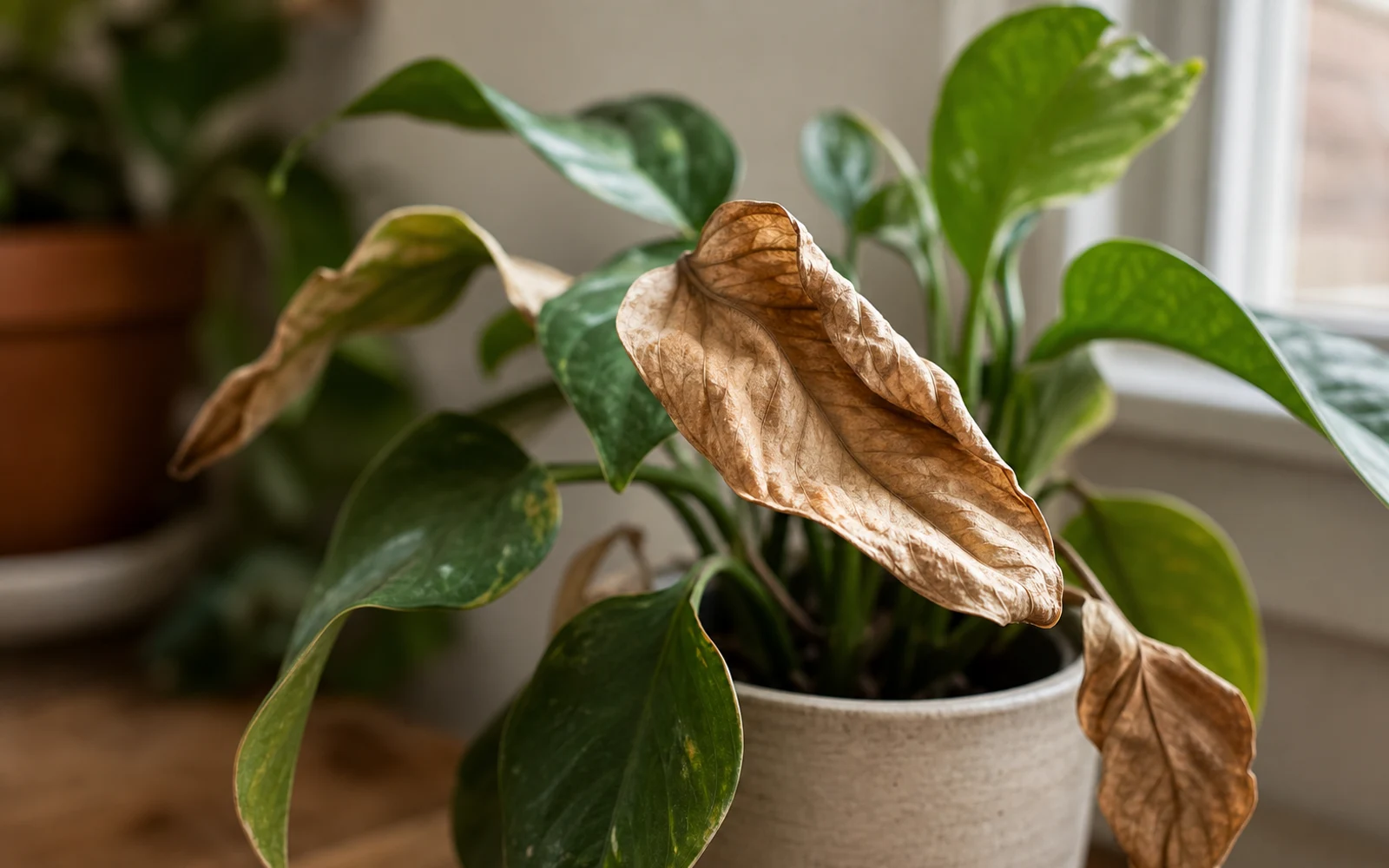
Dry curled brown houseplant leaf with brittle edges in a wide indoor plant photograph
Check moisture and heat exposure

At a glance

First possibilityRoot zone too dry
Also compareLight conditions do not match the plant
Damage patternEdges, patches, or whole leaf
Acting paceUsually moderate

Quick crispy leaves guide

Check first

  • Check moisture below the surface and compare the pot's weight with its normal watered and dry states if you know them.
  • Observe whether damage faces a bright window or began after a move, then compare exposure with the plant's light tolerance.
  • Inspect for pests and note recent heat, drafts, feeding, or other care changes before assuming one explanation.

Common causes

  • Root zone too dry
  • Light conditions do not match the plant
  • Possible pest pressure

Good to know

  • Crisp tissue is permanently damaged, so watch new growth.
  • Dry edges and bleached patches can reflect different exposures.
  • Humidity is context, not a diagnosis by itself.

What to do next

  1. Check moisture below the surface and review recent heat exposure.
  2. Compare the damaged side with the plant's light direction.
  3. Review feeding, salt buildup, and strong airflow.
  4. Correct one confirmed stress and monitor new leaves.

When to act fast

  • Crispy damage that appears quickly after a move into stronger light should be treated as a possible light-stress warning; avoid another abrupt location change.
  • Crisp leaves with persistent wet soil, drooping, dark tissue, or widespread decline need a broader root-zone inspection rather than repeated watering.

Not sure what your plant needs?Get a personalised shortlist from the observations you can confirm.

Compare observations →

Looking for plant-specific guidance?Compare these signs with the needs of your exact houseplant.

Browse plant guides →
Observation checker

Compare what you can confirm

Add only observations you are confident about. Unknown answers can stay blank, and the result remains a shortlist of checks rather than a diagnosis.

Results prioritise checks; they do not confirm one cause.
Common questions

Frequently asked questions

Do crispy leaves always mean underwatering?

No. Dry root-zone conditions are one possibility, but light stress and other factors can also be involved. Check the pot and damage pattern first.

Can direct sun make indoor leaves crispy?

Plants moved too quickly into stronger light can develop dry, damaged foliage. Match the location to the plant's light guidance and make changes gradually.

Should I cut off crispy leaves?

Removing clearly damaged material may improve appearance, but it will not resolve the cause. First review moisture, light, and recent care conditions.
Related plant profiles

Plants Care Editorial TeamPlant care research and editing

Last reviewed

This guide lists possible explanations and observable checks, not a confirmed diagnosis.