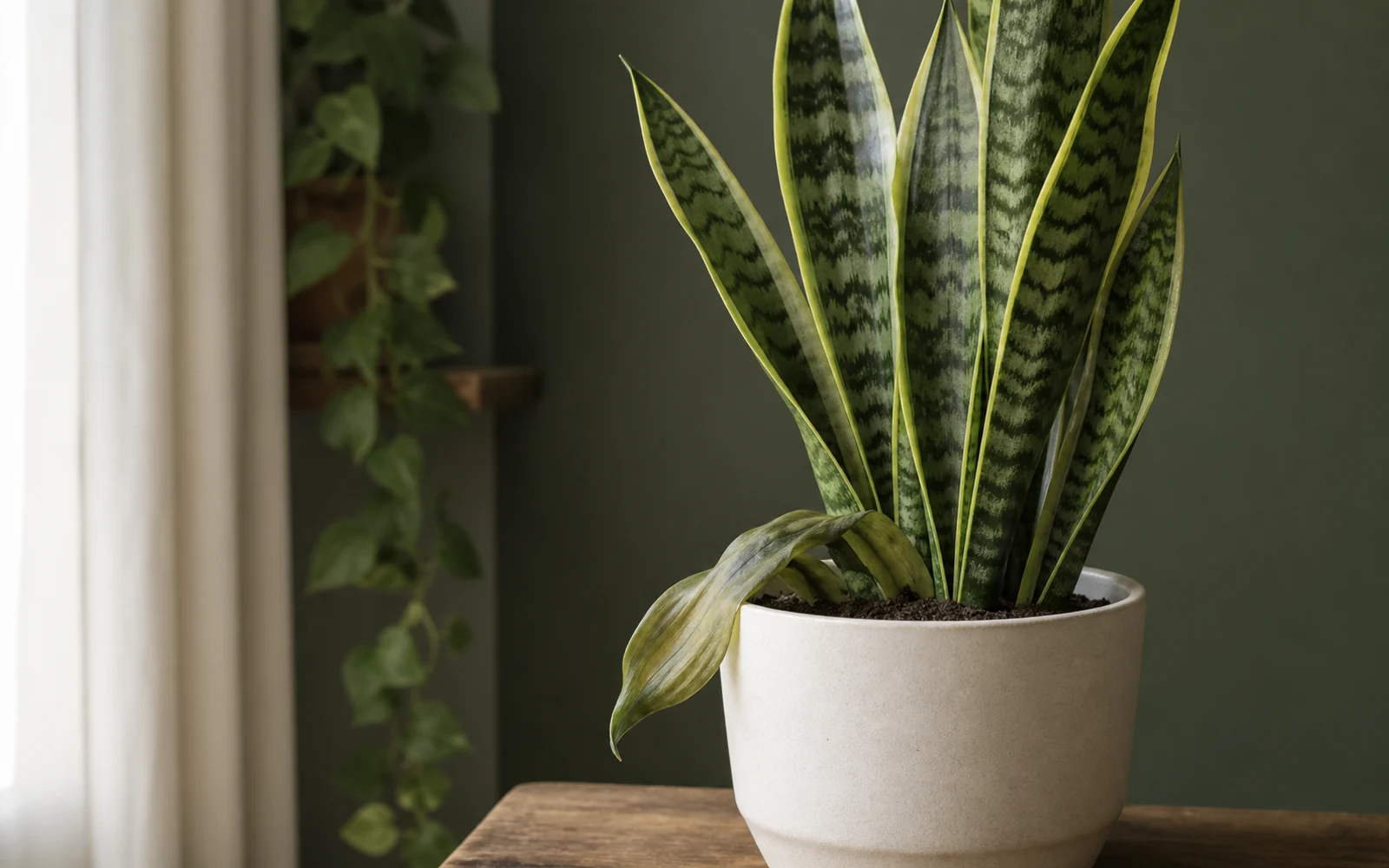
Soft snake plant leaves are a warning observation that calls for a prompt root-zone and drainage inspection.
This guide is not a diagnosis. Its checks are specific to the selected plant profile but still require observation before action.
Why this guide is different
The snake plant profile uses a deeper soil check and infrequent-watering tolerance, so lingering moisture deserves more weight than a surface-only observation.
Check first
Check deeper in the pot for wet mix and confirm that water can leave the container.
Inspect the base and accessible roots carefully for soft, dark, or unusual tissue without treating that as a diagnosis.
Note whether the pot has remained heavy across several observations.
Measured next steps
Pause watering and improve drainage information before changing other inputs.
Seek a qualified local assessment if soft growth persists or spreads.
Avoid
Do not water to correct a soft leaf.
Do not propagate visibly soft material as a workaround.
Warning signs to check promptly
A soft or darkening leaf base, spreading soft tissue, or an unusual smell needs prompt inspection; do not continue routine watering.
Dark, soft accessible roots with persistently wet mix are warning observations that call for a drainage and root-zone review.
Frequently asked questions
Do soft snake plant leaves mean it needs water?
No. Soft leaves are not a watering cue. Check the deeper mix and drainage before deciding what action is appropriate.
Does a soft snake plant leaf confirm root rot?
No. Soft tissue is a warning observation. Inspect the root zone, drainage, and tissue pattern together rather than assuming one cause.
Can I save a soft snake plant leaf by propagating it?
Do not propagate visibly soft material as a workaround. First assess the plant's condition and use firm, healthy material only when propagation is appropriate.