Check first
- Look at both sides of affected leaves and nearby new growth in good light.
- Check below the surface before assuming spots are caused by dryness or wetness.
- Compare the current position with recent changes in light, airflow, or handling.
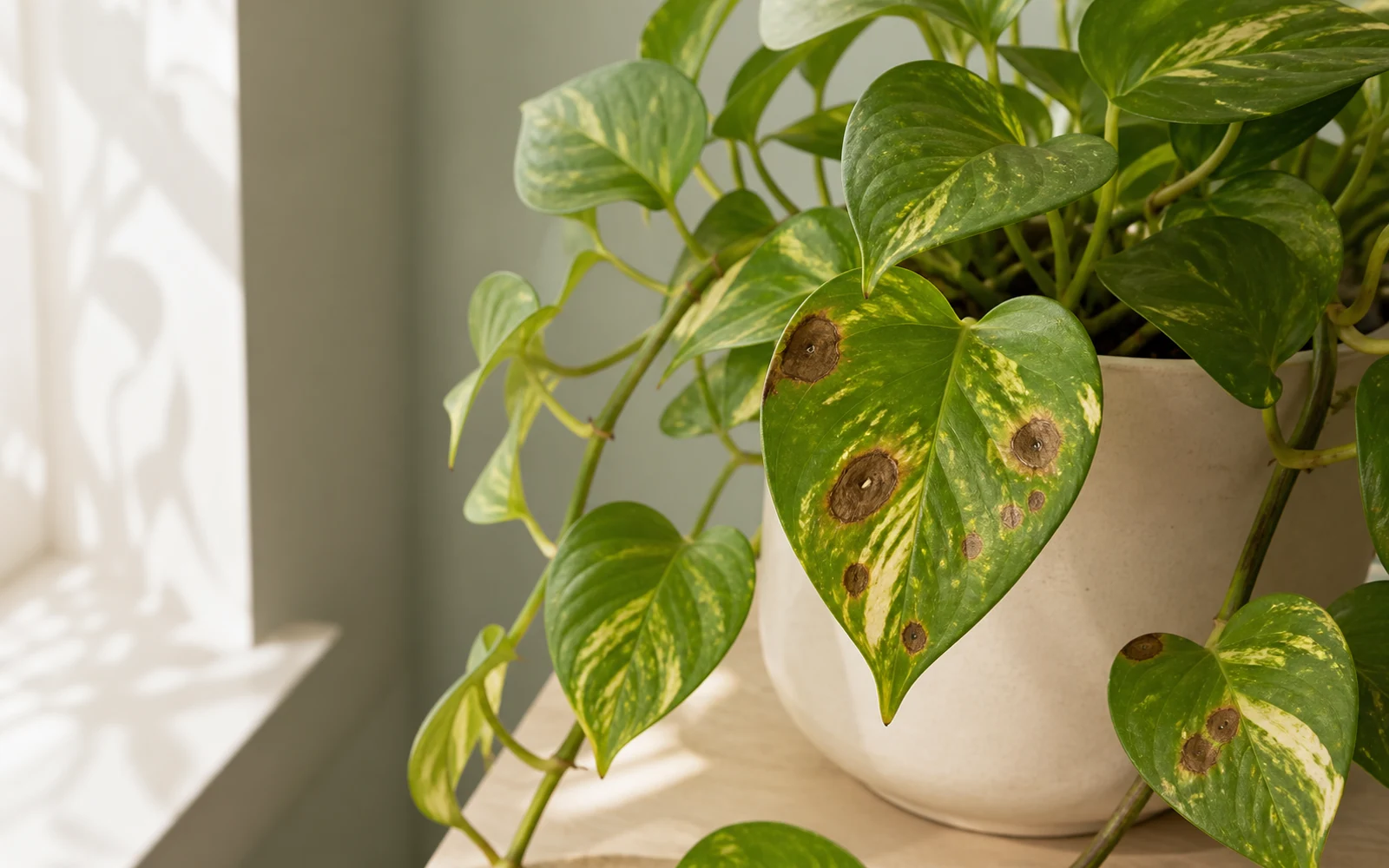
Brown or dark spots on golden pothos should be inspected in the context of leaf surfaces, root-zone moisture, and recent room changes.
This trailing profile can tolerate several indoor light levels, so the guide prioritizes observable leaf and pot conditions over a generic move-to-brighter-light response.
Compare the general symptom guideSee the wider set of cautious checks for brown or black leaf spots.
Open symptom guide →Review the complete care profileCheck light, watering tolerance, temperature, and seasonal needs.
Open Golden pothos guide →No. A spot pattern alone cannot confirm a cause. Inspect both leaf surfaces, root-zone moisture, pests, and recent changes first.
Remove only clearly affected material if appropriate, using clean tools. Avoid cutting large amounts of healthy trailing growth before you understand the pattern.
Do not apply a treatment before identifying what is visible as far as possible. Use only products labelled for indoor plants and follow the label exactly.