Check first
- Check both the upper and deeper mix before changing watering.
- Review the indirect-light position, airflow, and any recent temperature change.
- Inspect leaves for visible pests or damage before assuming the edge change has a single cause.
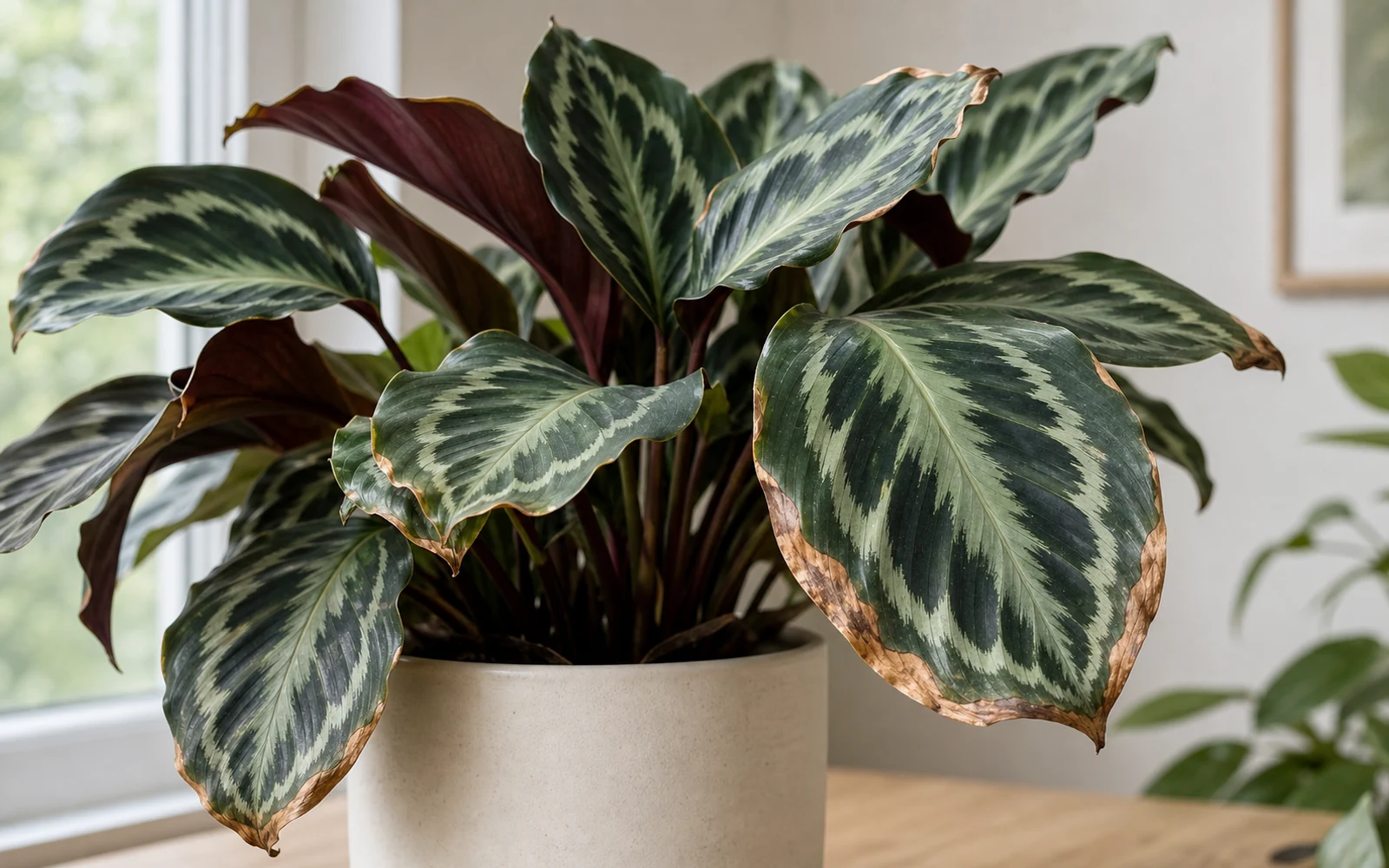
Brown edges on a Calathea are a multi-factor observation, not proof of one humidity or watering problem.
This profile is sensitive to overlapping moisture, light, airflow, and room-condition changes, so the guide emphasizes narrowing observations before reacting.
Compare the general symptom guideSee the wider set of cautious checks for brown tips.
Open symptom guide →Review the complete care profileCheck light, watering tolerance, temperature, and seasonal needs.
Open Calathea guide →No. Brown edges can overlap with root-zone and environmental changes. Check moisture, drainage, light, airflow, and pests before assigning one cause.
Only if the mix is dry at the appropriate depth. Extra water is not a reliable response when the root zone is still moist.
Do not add fertiliser as a first response to a stressed plant. Gather observations and review the plant's existing care conditions first.